Middle School Newsletters That Keep Families Engaged
TL; DR:
Middle school newsletters are powerful tools for keeping families engaged during a critical time when attendance typically starts declining. Effective newsletters balance practical information (events, deadlines, academic updates) with connection-building content (student spotlights, photos, community stories). The most impactful approach involves student contributions, as well. When families feel connected through regular, meaningful communication, they’re better equipped to support their middle schoolers, leading to improved attendance and engagement.
Middle school is a pivotal time. It’s when students are finding their independence, forming their identities, and (let’s be honest) sometimes pulling away from their families. It’s also when attendance starts to slide. Sixth grade marks the point where showing up becomes harder, and staying connected becomes more important than ever.
That’s where newsletters come in. A well-crafted middle school newsletter doesn’t just share dates and deadlines. It builds bridges between school and home, gives families the information they need to support their kids, and creates a sense of belonging that keeps everyone engaged.
But what makes a middle school newsletter actually work? Let’s explore what makes them effective, and share templates you can use to strengthen your own family communication.
What Should Be in a Middle School Newsletter?
The best middle school newsletters balance information with inspiration. They’re practical but not boring. They’re comprehensive but not overwhelming.
Essential elements include:
Upcoming events and deadlines. Middle schoolers are juggling more responsibilities than ever. Give families a clear calendar so they can help their kids stay organized.
Academic updates and resources. Share what students are learning, upcoming projects, and where families can find help if their kid is struggling. Include contact information for teachers, counselors, and support staff.
Student achievements and spotlights. Celebrate wins, big and small. Recognition matters at this age.
Attendance and wellness information. Be transparent about attendance expectations. Share resources for mental health, physical health, and academic support. Make it easy for families to reach out if their child needs help.
Community building content. Photos from recent activities, upcoming social events, and ways for families to get involved. Middle schoolers need to feel connected to their school community.
Student voice. This is huge. When students contribute to newsletters, everything changes. They feel ownership. They pay attention. Their families pay attention.
Real Examples of Effective Middle School Newsletters
Let’s look at what works in practice.
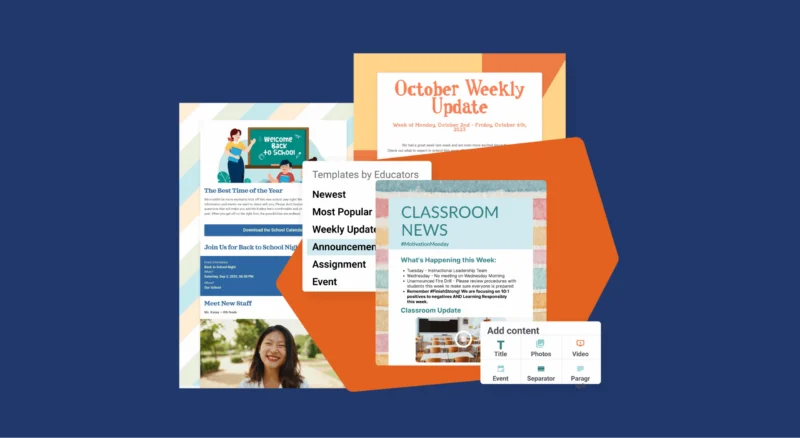
The Weekly Update approach gives families consistent touchpoints without overwhelming them. These newsletters typically run 3 to 4 sections: what happened this week, what’s coming next week, a spotlight or story, and key contacts or resources. They’re scannable, visual, and quick to read.
Download the Weekly Update Template
→ https://app.smore.com/templates/smore/68db7209be5af0916ba27814
The Monthly Deep Dive works well for schools that want to provide more context and storytelling. These newsletters might feature longer articles about what students are learning, detailed event previews, extended student interviews or creative work, and resource guides for families.
Check out the Classroom Update template
→https://app.smore.com/templates/smore/6889d128b1b31041af3620cf
The Student-Created Newsletter might be the most powerful option. When you put middle schoolers in charge of capturing and sharing their school experience, magic happens. Students can rotate roles as reporters, photographers, designers, or meme creators (yes, really). They interview classmates and teachers, document events, and decide what’s actually newsworthy. This approach accomplishes two things at once: it creates authentic content that resonates with families AND it gives students a meaningful role in their school community.
Start with our Student Voices template
→https://app.smore.com/templates/smore/68ad8af328b8fa491524bc1c
How to Get Middle Schoolers Involved in Newsletter Creation
Here’s where things get interesting. When students help create your newsletter, engagement skyrockets. Both theirs and their families’.
Start small. You don’t need to hand over the entire newsletter on day one. Begin by having students contribute one section, like a weekly wrap-up or event recap.
Create roles. Students like knowing what they’re responsible for. Establish clear positions: reporters who interview classmates and teachers, photographers who document school life, designers who choose layouts and visuals, editors who review and polish content, and meme curators who add humor and personality (seriously, let them do this).
Rotate opportunities. Create a schedule so everyone who’s interested gets a turn. This builds broader investment in the newsletter and ensures diverse perspectives.
Provide structure and feedback. Middle schoolers need guardrails. Give them templates, style guides, and clear expectations. Review their work and offer constructive feedback. This is a learning opportunity.
Celebrate their contributions. When their work goes out to families, make sure they know. Recognition matters. Their parents will be proud, and other students will want their turn.
Student involvement does more than create good content. It builds digital literacy, writing skills, collaboration abilities, and school connectedness. It gives students a reason to care about what’s happening at school. And when students care, they show up.
Tips for Newsletters That Families Actually Read
Creating a newsletter is one thing. Getting families to read it is another.
Consistency matters. Pick a schedule and stick to it. Whether it’s weekly, biweekly, or monthly, families should know when to expect your newsletter.
Subject lines are everything. Be specific and compelling. “November Newsletter” won’t get opened. “8th Grade DC Trip Info + This Week’s Testing Schedule” will.
Front-load the important stuff. Busy families might only read the first section. Put time-sensitive information at the top.
Use visuals strategically. Photos of actual students and events (with appropriate permissions) dramatically increase engagement. Stock photos don’t cut it.
Keep it scannable. Use headers, bullet points, and white space. Big blocks of text get skipped.
Make it personal. Write like you’re talking to a specific family, not broadcasting to a crowd. Use “your student” instead of “all students.”
Include clear calls to action. What do you want families to do with this information? Make it obvious.
Optimize for mobile. Short paragraphs, large fonts, and quick-loading images make mobile reading easier.
Making Your Middle School Newsletter Work for You
Here’s the truth: the perfect newsletter doesn’t exist. The right newsletter is the one you can actually sustain, the one families will actually read, and the one that strengthens your school community.
Remember: every newsletter you send is an opportunity to build connection, support students, and remind families that they’re part of something bigger. In middle school, when kids are figuring out who they are and where they belong, that matters more than ever.
FAQ
What should be in a middle school newsletter?

How often should middle schools send newsletters?
How can I get middle school students involved in creating newsletters?
What tools make creating middle school newsletters easier?
How can newsletters help with middle school attendance?