Monthly Classroom Newsletter Ideas to Keep Families in the Loop All Year
TL; DR:
Monthly classroom newsletters help teachers build stronger connections with families without overwhelming their schedule. This post shares practical ideas for what to include, from student highlights, learning themes, celebration sections, and seasonal activities to tips for creating newsletters that families actually read.
Let’s be real: keeping families in the loop is important, but adding one more thing to your to-do list? Not so much.
That’s where a monthly classroom newsletter comes in. It’s a simple, effective way to share what’s happening in your classroom without the pressure of constant updates. And when done right, it builds trust, keeps families engaged, and creates a sense of community, all without taking over your precious planning time.
Here’s how to create a monthly newsletter that families look forward to reading.
What Should Be Included in a Monthly Classroom Newsletter?
A great monthly newsletter just needs to be clear, helpful, and easy to scan. Here’s what works:
1. A Personal Welcome
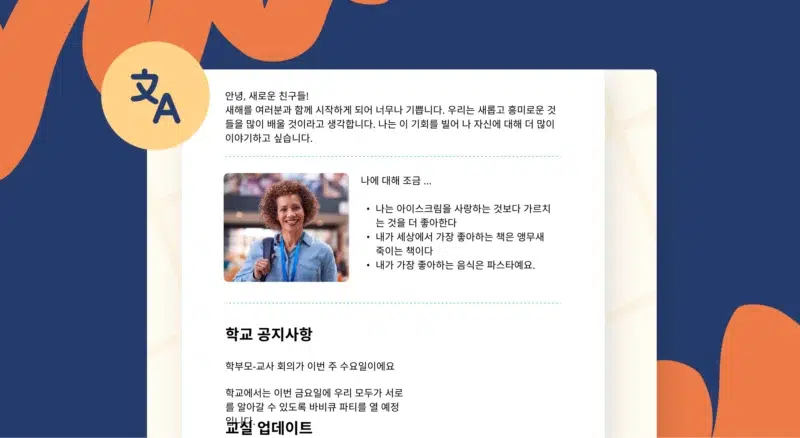
Start with a short, friendly message. This is your chance to set the tone and make families feel connected to what’s happening in your classroom.
Example:
“Happy October! This month, we’re diving into our unit on community helpers, and students are already so excited. I’m looking forward to sharing what we’re learning with you.”
2. Monthly Learning Theme
Give families the big picture of what you’re focusing on this month. This is perfect for the monthly format—you’re not listing every single lesson, just the major themes and goals.
Example:
“This month in reading, we’re exploring poetry and figurative language. Students will learn to identify similes, metaphors, and personification in the poems we read together. In math, we’re focusing on fractions. We’re using hands-on activities to understand equal parts and comparing fractions.”
3. Student Celebrations & Spotlights
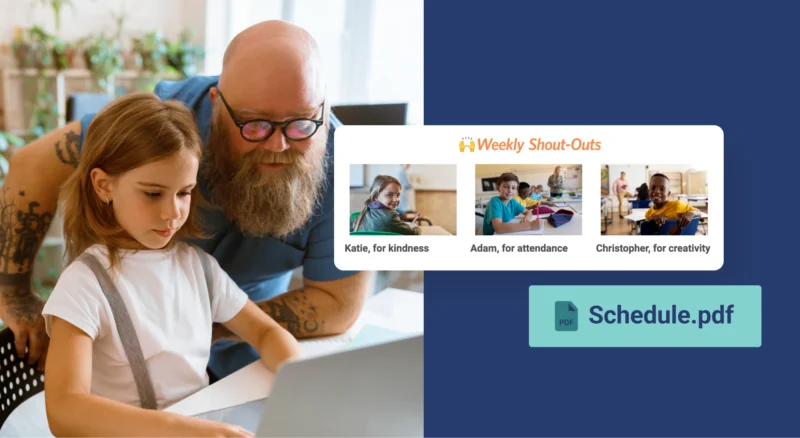
Shine a light on students throughout the month. This could be academic achievements, acts of kindness, growth moments, or just students being awesome. Rotate who gets highlighted to keep it inclusive.
Ideas for monthly spotlights:
- Student of the Month with a short interview (“What’s your favorite book?” “What do you want to be when you grow up?”)
- Class achievements (“We read 500 books together this month!”)
- Birthday celebrations
- Photos of students engaged in learning (with permission)
Example:
“September Student Spotlight: Meet Jackson! Jackson loves building with blocks during maker time and is working hard on his multiplication facts. Ask him about the tower he built that was taller than his desk!”
4. Monthly Calendar at a Glance
Since you’re sending monthly, families need to see the whole month ahead. Include:
- Field trips or special events
- Testing dates
- School holidays or breaks
- Special classroom activities
- Parent-teacher conferences
Example:
October at a Glance:
- Oct 6: Fall field trip to the pumpkin patch
- Oct 13: Picture day
- Oct 20-21: Parent-teacher conferences
- Oct 31: Halloween celebration (costumes welcome!)
5. Behind-the-Scenes Classroom Life
This is where monthly newsletters really shine—you have space to share the stories and moments that matter. Give families a window into your classroom.
Ideas:
- “A Week in Photos” collage
- Quotes from students about what they’re learning
- A peek at current projects or bulletin boards
- “What made us laugh this month”
- Student artwork or writing samples
Example:
“This month, students created self-portraits inspired by different artists. The creativity and attention to detail were amazing! Check out the photos below to see some of their work.”
6. Ways to Extend Learning at Home
Give families simple, actionable ideas they can do throughout the month to reinforce what’s happening in class.
Example:
Try This at Home in October:
- Visit your local library and check out books about fall or community helpers
- Practice counting coins during everyday activities (paying for snacks, sorting change)
- Go on a nature walk and collect fall leaves then sort them by size, color, or shape
- Read together for 20 minutes each night and talk about the characters
7. Wish List or Helpful Reminders
Use this space for practical info: supply needs, volunteer opportunities, or important reminders for the month.
Example:
“We’re running low on tissues and hand sanitizer. If you’re able to send some in, we’d really appreciate it! Also, don’t forget to check your child’s backpack daily for important papers and library books.”
Creative Ideas for Monthly Newsletter Sections
Want to make your newsletter even more engaging? Try rotating in some of these special sections:
“Ask Me About…”
Give families conversation starters for the month.
Example: “Ask me about: our science experiment with volcanos, the new chapter book we’re reading, my favorite math game”
Book of the Month
Feature what you’re reading together as a class and why you chose it.
Math Challenge of the Month
Share a fun problem families can solve together at home.
Student-Generated Content
Let students contribute! Include their drawings, favorite learning moments, or answers to questions like “What was the best thing that happened this month?”
Classroom Helper Highlights
Recognize students who helped make the classroom run smoothly.
“What We’re Wondering”
Share questions students are asking and exploring.
Monthly Goal Check-In
If your class has learning goals, update families on your progress.
Tips for Creating Monthly Newsletters Families Actually Read
Think Big Picture
Monthly newsletters let you step back and share themes, patterns, and progress rather than day-to-day details. Use that to your advantage.
Keep it Visual
Include photos of students in action (with permission), colorful graphics, student artwork, or even a monthly photo collage. Visuals make your newsletter more engaging and help families feel like they’re part of the classroom.
Make it Scannable
Families are busy. Use headers, bullet points, and short paragraphs to make your newsletter easy to skim. They should be able to get the key info in under 2 minutes.
Be Consistent with Timing
Pick a day each month to send your newsletter—like the first Friday or last Monday—and stick with it. Families will start to expect it, and you’ll build a habit that’s easier to maintain.
Let Your Personality Shine
Write the way you talk. Families want to hear from you, not read a formal memo. Your warmth and enthusiasm are what make families feel connected.
Use a Template
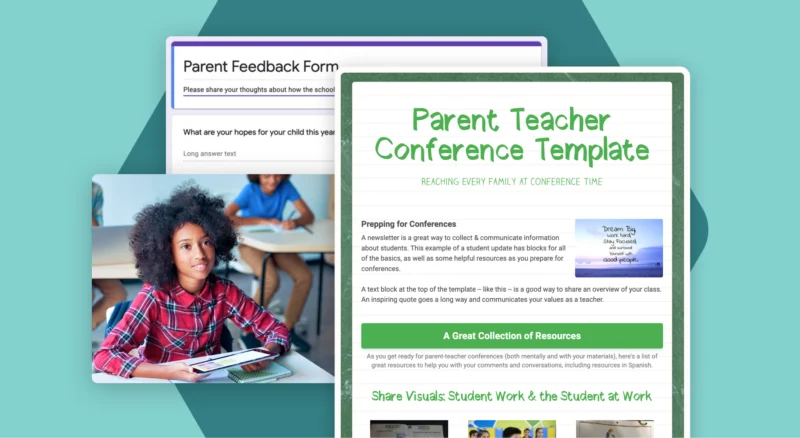
Templates save time and keep your newsletters looking polished month after month. Smore’s classroom newsletter templates are designed specifically for educators. Just fill in your content and you’re done ✔️
Explore Smore Templates →https://app.smore.com/templates/smore
Sample Monthly Newsletter Structure
Here’s a simple structure you can follow:
📧 Monthly Newsletter Template
Header: [Month] in [Your Classroom Name]
Section 1: Welcome & Monthly Theme
Section 2: Student Spotlights
Section 3: Monthly Calendar
Section 4: Classroom Highlights (photos, quotes, projects)
Section 5: Try This at Home
Section 6: Reminders & Wish List
Footer: Contact info and invitation for questions
Make Monthly Newsletters Part of Your Routine
Monthly newsletters don’t have to be one more thing on your plate. With a little planning and the right tools, they become a powerful way to build trust, celebrate students, and keep families engaged—all while respecting your time.
Start with a template, add your own voice and photos, and watch how families respond when they feel connected to what’s happening in your classroom.
The best part? You only have to do it once a month.
FAQs
What should be included in a monthly classroom newsletter?

Is there a template for a teacher's monthly newsletter?
How long should a monthly classroom newsletter be?
What's the best day to send a monthly classroom newsletter?