Build a School Information Hub Families Actually Use

TL; DR:
If families are overwhelmed, confused, or missing key updates, the problem usually isn’t too little communication. It’s too many places to look! A centralized information hub gives families one predictable place to find answers and helps districts reduce misalignment and build trust.
When school communication lives everywhere, families tune out
Emails, PDFs, flyers, social posts, website updates. When information lives in too many places, families stop trying to keep up. Staff feel the strain too, fielding the same “Where do I find…?” questions again and again.
Districts need clarity, consistency, and confidence that families are seeing the right version of the truth.
That’s where an information hub comes in.
What an information hub actually means
Centralizing information doesn’t mean sending more messages. It means creating:
- One predictable place families can go for current answers
- One predictable way staff share information
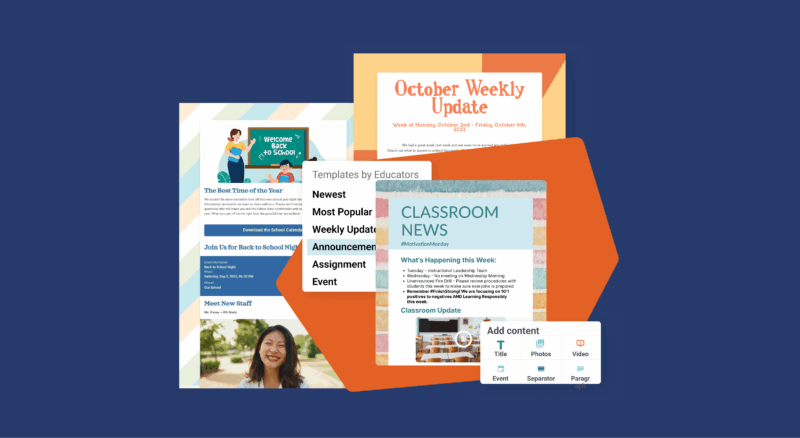
At Weymouth Public Schools, this shift replaced one-off documents and scattered updates with a single, living hub that families learned to trust.
The result was fewer follow-up questions, stronger engagement, and smoother school-to-family communication.
The structure that makes hubs work
Successful hubs share a few common traits:
- Clear organization between evergreen content and time-sensitive updates
- Consistent structure and visuals so families can scan quickly on their phones
- Built-in translation and accessibility
- Clear ownership so content stays current
What doesn’t need standardizing? Voice and local flavor. Clarity builds trust, not rigidity.
A simple five-step playbook any district can use
- Audit your inbound questions from families
- Define your core topics and hub structure
- Set ownership and workflows
- Launch once topics are clearly defined
- Use analytics and feedback to refine
Centralization works best when it becomes a habit, not a one-time project.
Want to see what a working district information hub looks like in real life?
👉 Watch the on-demand webinar: How to Use Smore to Build an Information Hub That Works
Hear directly from Weymouth Public Schools on how they reduced confusion, centralized messaging, and improved family engagement, all without sending more emails.
FAQ
What is a school information hub?

Will this replace newsletters or emails?
How does this help multilingual communities?
Do small districts need an information hub too?