Three Newsletter Habits That Get Families to Respond

TL;DR:
In a recent Smore survey, 51% of school administrators named the same biggest challenge: getting families to respond. The newsletters that earn replies share three habits: structured for skimming, specific in what they ask, and consistent enough that families look for them.
Getting families to respond is the number one communication challenge for school administrators, according to a recent Smore survey. A response means a family read the message, cared about it, and wrote back. That’s the difference between a broadcast and a relationship.
Three newsletter habits close that gap:
1. Structure the newsletter so families can find what matters
Families open a newsletter on their phone between drop-off and work, scan for anything urgent, and move on. If what matters isn’t findable in the first few seconds, they’re done.
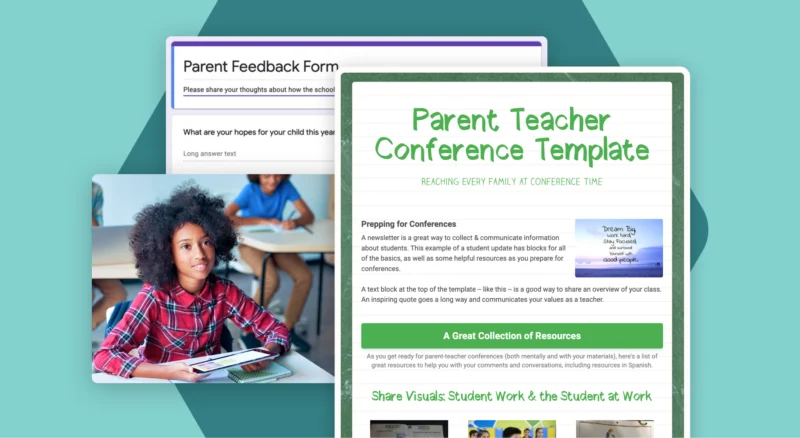
Clear structure removes that friction. A table of contents, dates up front, and a consistent layout all send the same message: I know you’re busy. Families who recognize the format from last month’s newsletter already know where to look.
The same principle applies to the ask itself: put it somewhere prominent, make it explicit, and tell families exactly what you need. When the path is clear, families follow it.
2. Ask something specific
A message that could have been sent to anyone feels like it was sent to no one.
The newsletters that earn replies give families something concrete to react to: a question about their child, an invitation that requires a yes or no, a specific moment worth celebrating. “Thanks for reading!” ends the conversation. “I’d love to hear what your child thought of our science experiment this week” starts one.
Watch out for what one district communications director calls zombie posts: recurring asks that never resolve. When families see the same unanswered request week after week, they stop reading carefully. Every ask should have an owner, a deadline, and a clear next step. When it’s resolved, take it out.
3. Show up on a schedule families can count on
The families most likely to respond in February are the ones who have been opening your newsletter since September. Familiarity builds trust, and trust is what turns a reader into a respondent.
Consistency also matters in the summer, when it’s tempting to go quiet. Districts that maintain their newsletter cadence through June and July arrive in August with a warmer audience than those who restart from scratch. A lighter summer edition still works. It tells families you’re here, you’re thinking about them, and you’ll see them soon.
When families know what to expect and it shows up, communication stops being something you send and starts being something they look for.
Build newsletters families come back to. Explore Smore for Teams
FAQs
How long should a district newsletter be?

What's the best day and time to send a school newsletter?
How do we handle topics that require follow-up from families but don't get responses?
Should every newsletter have a call to action?