Give a Boo-st to Your School Communications in October: Key Takeaways from Our Latest Webinar

TL; DR
October is the ideal time to establish strong school communication patterns. In our recent webinar, David Leshaw and Kara Stern share why families are settled but still engaged right now, plus proven strategies from real schools like the “Week Ahead” box that boosted open rates 23%. Learn how to move from feast-or-famine communication to consistent cadence, implement simple templates that work, and enable collaboration across your district. Watch the full webinar for step-by-step guidance and ready-to-use frameworks.
Feeling overwhelmed by school communications right now? You’re in good company. That’s exactly why we hosted our recent webinar, “Boo-st Your School Comms in October: Tips, Tricks, and Treats for Scary-Good Newsletters.”
Smore’s David Leshaw (Director of Growth Marketing) and Dr. Kara Stern (Director of Education) walked through why October is actually the perfect time to level up your communications and shared practical strategies you can implement right away.
Why This Webinar Matters
The biggest communication challenge comes down to establishing consistency in a way that works for your team and your families.
David and Kara tackled the real issues school communicators face:
- Finding time to create consistent content
- Getting families to actually read what you send
- Coordinating communication across different schools and staff
- Knowing what information to prioritize
- Measuring whether your communications are working
October Is Your Communication Sweet Spot
Here’s something most school communicators don’t realize: October occupies a unique position in the school year.
“You’re past the frantic back-to-school rush of September, but you haven’t yet hit the holiday chaos of November and December,” David explains. “Families have settled into routines, and they’re still paying attention.”
This makes October the ideal month to establish communication patterns that will carry you through the rest of the year. You have breathing room to plan, families are paying attention, and you can set expectations before the busy season hits.
The Three Foundation Pieces
David outlined three core elements every school needs:
Consistent Cadence – Pick a schedule (weekly, bi-weekly, or monthly) and stick to it. Consistency builds trust.
Clear Hierarchy – Help families understand what they absolutely need to know versus what’s nice to know. When you prioritize information clearly, families can scan and find what matters most to them.
Multiple Touchpoints – Email, website, social media, text alerts. Use the channels your families actually check to reach them where they already are.
The schools who nail this treat communication as a relationship, not a checklist.
Real Tricks from Real Educators
One of the most valuable parts of the webinar was when Kara shared actual strategies from educators using Smore. These are working in schools right now.
The “Week Ahead” Preview
One school started including a simple “Week Ahead” box in every newsletter. Just the key dates and events families need to know. Open rates went up 23% because parents knew they’d find useful information fast.
Student Voice Spotlight
One principal wanted her newsletters to feel more personal. Now every newsletter includes a 2-3 sentence quote from a student about something happening at school. Takes 5 minutes to collect, and it makes the whole newsletter feel more human.
The “Behind the Scenes” Section
Share a quick photo from a teacher training, a snippet from a leadership team meeting, or even a peek at custodial staff preparing for a big event. It builds trust and transparency in a way that feels approachable.
The FAQ Collection
Start a simple FAQ section: “This week, families asked about…” It saves time and shows you’re listening.
“The pattern here?” Kara points out. “None of these require special software or huge time investments. They just require thinking about communication as conversation, not broadcast.”
Practical Implementation: What You Can Do This Week
David showed exactly how to implement these strategies. Here are the “treats” he outlined:
The 5-Minute Audit
Before your next send, ask yourself:
- Would I read this if I weren’t required to?
- Does the most important information appear in the first paragraph?
- Did I include at least one thing that will make someone smile?
The Template That Actually Works
David shared a simple structure:
1. Opening: One sentence about the week or month
2. Need to Know: 3-4 bullet points maximum
3. Nice to Know: Additional details for interested families
4. Community Spotlight: One positive thing happening
5. Looking Ahead: What’s coming next
The Collaboration Hack
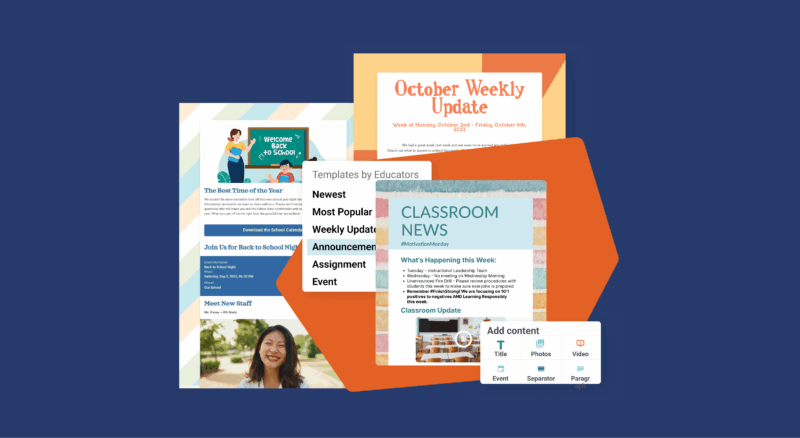
David demonstrated how Smore’s collaboration features help districts solve one of their biggest pain points: when communication feels siloed, with principals doing their own thing and district offices doing theirs.
With the right tools, you can:
- Share templates across schools
- Collaborate on content in real-time
- Maintain brand consistency while allowing school-level customization
- Track what’s working and what isn’t
The Engagement Booster
Add one interactive element to your next newsletter:
- A simple poll (“Which spirit week theme should we choose?”)
- A photo submission request
- A question for families to discuss at dinner
Small engagement leads to big engagement.
The Takeaway: Progress Over Perfection
“We could give you 47 more tips and tricks,” David said near the end, “but the truth is, the best communication strategy is the one you’ll actually use consistently.”
Kara emphasized the same point: “Whether you’re in week one or week ten of the school year, your community wants to hear from you. They just want it to be worth their time.”
The schools that excel at communication have made one key shift: they treat communication as a relationship, as an ongoing conversation with their community.
Watch the Full Webinar
Want to see all the strategies in action? David and Kara cover even more in the full webinar, including answering questions about breaking the feast-or-famine communication cycle and what it looks like to treat communication as a relationship in practice.
Whether you’re a district communications director establishing consistency across multiple schools, a principal juggling competing priorities, or a teacher wanting to better connect with families, the strategies in this webinar will help you create communications families actually want to read.
FAQ
What specific tools do I need to implement these strategies?

Is this relevant for small schools or just large districts?
What if we're already past October?
Where can I find the templates mentioned in the webinar?