District Overview
District: Prospect Heights School District 23
Size: 4 schools; 1,500 students
Location: Prospect Heights, Illinois
Prospect Heights School District 23 is a small district just outside of Chicago, Illinois. Their size and history have fostered a lot of pride, with many families, students, and employees using the hashtag #PROUD2BD23. This is the result of years of intentional relationship-building.
Nine years ago, however, communication between the district and stakeholders was just a volume game. District staff had plenty of information to share, including updates, reminders, events, and compliance notices, and they didn’t hesitate to send it all. The result was what Chris Alms, the district’s Director of Technology and Communications, calls a “communication buffet.” Outreach was plentiful, varied, and easy to ignore.
The district needed a new approach. What followed was a nine-year evolution in communication that transformed how Prospect Heights SD 23 connects with families. Along the way, Smore newsletters have been central to the change.
Too many unread messages
When Chris first audited the district’s communication strategy, it became clear that multiple channels were competing for family attention. Timing was also unpredictable, which meant staff didn’t know when to contribute content, and families didn’t know when to check their inboxes. Summer was even worse. Without students carrying information home, district communication went quiet at exactly the moment big projects like construction, renovations, and planning were moving forward.
The district also lacked meaningful engagement data. They didn’t know when families were reading, on what devices, or what content was actually prompting action. Without that, every communication decision was a guess.
Sending fewer communications that better engage families
The district started where Chris believes every district should: with a survey. Working with the PTO, parents, and teachers, Prospect Heights SD 23 gathered specific data on how families engaged with communications and what they really wanted to receive. The results gave the district “explicit permission to do less communication, but do it much more intentionally.”
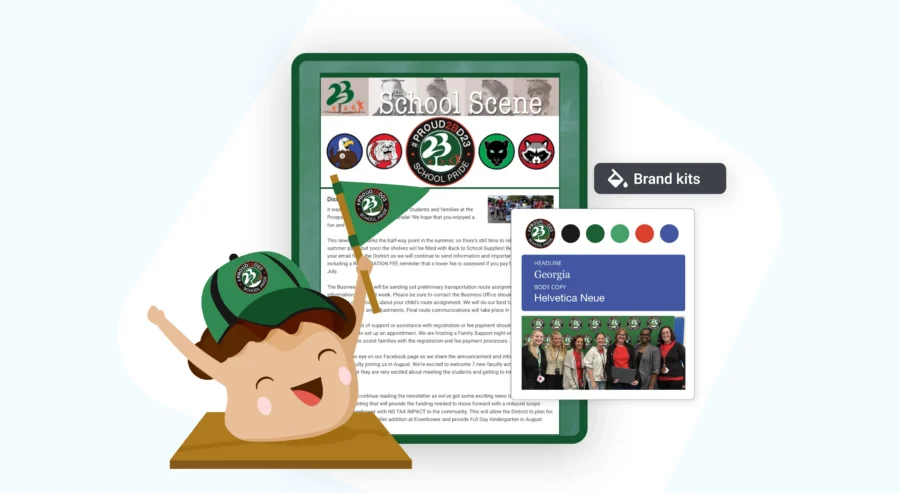
From that data came the “Twix method”: two predictable, primary channels for family communication. Principals send a newsletter every other Friday, using Smore templates and brand kits for consistent formatting. The superintendent publishes a district-wide “School Scene” once a month, always on the Friday following the board meeting, featuring strategic plan updates, community events, and a personal message from the superintendent himself.
The structure has helped both staff and families. Staff know exactly when to submit content. Families know exactly when to look for it. Smore analytics let the team track average read times, identify which content sparks action, and spot “zombie” posts, which Chris nicknamed the content that kept reappearing without driving results.
Mobile accessibility became a priority, too. Analytics showed a clear majority of families were reading newsletters on phones. The team moved away from heavy PDF attachments, relying instead on short paragraphs, captioned images, and alt-text so that every newsletter is scannable and readable on any device.
At the same time, the district began prioritizing summertime communication. Summer newsletters include construction updates with featured photos and videos of real-time progress. The superintendent even shares moments from his own life. “Our schools belong to the community,” Chris says. “We want to give people something to talk about.”
Building relationships between schools and families
The shift from volume to curation changed what families actually experienced at the start of each school year. Families now arrive at back-to-school events already invested and already informed. “If they come in and say, ‘Wow, that’s the gym I saw you guys resanded over the summer!’ it completely changes the dynamic,” Chris explains.
Communication also became a cultural anchor for how staff and families stay aligned.
The change has even been noticeable by district leadership. Dr. Don Angelaccio, Prospect Heights’ Superintendent, shared,
Communication only works if it is clear and useful to the reader. Our use of Smore has enabled us to create engaging, consistent, and robust newsletters to connect with our various stakeholders. Kids, parents, staff, and community alike benefit from the photos, links, and embedded translation features that make the content accessible and interesting. This has helped us strengthen connections throughout the district and keep our community informed.
Dr. Don Angelaccio,Superintendent
Changing culture through districtwide alignment
What distinguishes Prospect Heights SD 23 is the culture that nine years of intentional communication have built. The community knows the district, talks about it, and actively shows up to support it.
What started with a survey has turned into a districtwide communications strategy that fully engages both staff and families.